
As part of a series of interviews we are showcasing the potential for lawyers beyond the ‘traditional role’. In Part 1 of the series Syed Nasser speaks to Sanjay Mehta, a former law firm partner to discuss his experience transitioning out of private practice.
Could you tell us a bit about your background and your current role?
I’m the Chief Commercial Officer and General Counsel at ITARMI. Previously I was a partner in a US-HQ international law firm (and at a UK-HQ firm before that). ITARMI simplifies the delivery of IT engineering services through an innovative software platform. We’re an international business, serving well-known, large enterprise customers across different sectors from financial services to consumer technology and providing services into locations as diverse as New York, Frankfurt, Tokyo and Melbourne. My working environment and role are quite different to my career in private practice. I also advise other startups (e.g. edtech and deeptech). In terms of values, I am passionate about Diversity & Inclusion.
Why did you leave private practice?
Practice had been a very rewarding career, but for some time I’d been looking for the right opportunity to join a great team that was building an industry-changing business (ITARMI’s mission is to change the way that managed IT services are delivered). This means having fewer committees and a stronger bias to action. As a startup, our opportunities and challenges are both significant. Also, I wanted to have a broader, commercial role. In addition to overseeing legal, I work very closely with other members of the C-suite (esp. the CEO, CTO and CFO) and with our teams that are focused on sales, commercial strategy, product development and information security management systems.
Were there any challenges in making a move?
Plenty of challenges. I’ll mention one that was maybe less obvious: as I wanted a business leadership role, it wasn’t enough for me to re-imagine my own role; I also had to demonstrate wider capabilities, interests and ambitions to a range of stakeholders, such as teammates and investors. If you want to diversify your role, you have to help stakeholders and decision-makers to envision that outcome – this applies whether you’re in an organisationally complex corporate or a startup and it’s an ongoing process. On an ongoing basis, having a growth mindset also helps to show that you want to grow dynamically with your new role.
What are some of your biggest challenges today?
One of the biggest challenges is time management. I’ve found two coping strategies have helped. Firstly, triaging – focusing on high priority, measurable and realistic goals for any given period (e.g. Q1 2021). Secondly, being able to look at an unfinished “to do” list without too much guilt or judgment. This also means recognising that certain things are outside of my control and that there are always going to be fires burning. I haven’t mastered these techniques yet, but I’m working on it.
How does your working day differ now?
Firstly, tremendous variety – there’s always stuff to keep you interested and on your toes. It’s not a comfort zone. Secondly, closer communications and collaboration. Tools such as Slack and Teams make it easier for distributed teams like ours to manage business operations and execute effectively. Thirdly, deliverables: I’m focused on what we need to achieve – whether that’s me, a team or the company. Aside from revenue, we try to measure progress and results in terms of objective criteria (e.g. OKR, NPR or KPI). On a personal level, I’m not tracking billable hours.
Do you have any advice for those considering a similar change?
The marketer in me is a fan of the “power of 3”, so I’ll mention 3 things! Firstly, be an infinite learner (I’m borrowing the words of Silicon Valley legend, Reid Hoffman). You’ll be more engaged and engaging. To put it another way, enjoy the journey as well as the destination. Secondly, develop your personal brand. Think about what your core values are, what you can contribute to a company’s culture (“culture add” rather than “culture fit”) and how you can share these attributes. You may need to shift gear on this if it’s not something that’s been particularly encouraged or celebrated at your firm. Lastly – and most importantly – Diversity & Inclusion. Embrace it. Just as you have a unique contribution to make, so do others. Empower, include and support others. It’s not just right thing to do, it’s important for your own sense of well-being.
 By Syed Nasser, Head of Technology Transactions & Venture Capital
Email: snasser@fidessearch.com
Mobile: +44 (0) 7960 739 158
Direct Dial: +44 (0) 20 3642 1871
ITARMI: Business IT Support Platform | ITARMI

After speaking with a number of IP practitioners within both industry and private practice about using existing technology, we thought it would be useful to report on the state of platforms used. Are the tools at their disposal are good enough, or what, if anything, can be improved to make the overall experience better for them and their clients?
Existing technology:
A good starting point is to list the common platforms that IP professionals use to search for patents and managing them. This is not an exhaustive list and is a combination of paid for and free to use software.
As the above is not an exhaustive list, the immediate thoughts are there are so many different types of software to use and there is not one uniform platform. Whilst there is an argument to say this is no bad thing, for lawyers and attorneys across IP, this is a professional nightmare. There is no consistency and if anything, there is an overabundance of technology available (albeit not all will be fit for purpose)
Concerns from patent professionals:
Having spoken with patent professionals, it was consistently referenced that technology should be there to simplify processes. If they need to trawl through several databases and use multiple pieces of software, then this goes against that sentiment and creates additional problems that the technology is meant to aid.
A large part of making their life easier comes simply down to the interface with the user. Most of the platforms mentioned above are quite complex and not user friendly at all. It makes it difficult to keep track of patents. Examples do exist where tools have been developed to track prosecution status which enables
With that being said, there has been the introduction of tools that track prosecution statuses, such as PatentTracker, making it easy to comply with inventor laws (depending on the jurisdiction) These tools will automatically submit a claim that has to paid, directly to the law firm / individual in question.
A number of those questioned for this article commented that there is a lack of technology that suitably brings together all the component parts of the process from search to filing. This is deemed to be the next big evolution for existing technology.
Current platforms and software require extensive training to properly implement and use the technology, which is a huge time investment. During the life cycle of a patent attorney / lawyers’ career, it is highly likely they will be having to re-train themselves on moving to a new firm that does not use the same software.
The biggest difficulty when it comes to processing patent applications, and to a certain extent, trademark applications, is that the terminology can often vary. This hampers a search as a catch-all search will not necessarily capture the correct information and can leave the client / firm exposed to infringements and potentially serious litigious action taken against them.
One individual I spoke with raised an excellent point. They were comparing patent searches with other industries; in this case it was the recruitment world. By default, certain industries incentivise you to submit the correct information. For example, if you are interested in a new role, you will go to the website, fill in the form and submit your CV. All of this is relevant purely for that submission.
In the patent world, it is very much the reverse. There is no correct pre information to digest. You are relying on hundreds, if not thousands (and beyond) individuals inputting the correct information across different jurisdictions. This is something that cannot be managed properly unless technology changes.
Unfortunately, nobody is arranging the data in a way that can be accurately processed. As it stands, professionals use different terminology for things that really should be categorized in a consistent way. This must change to generate accurate searches.
There are further barriers when it comes to accurate translations incorporated into existing software. A majority of this is currently outsourced to companies who will translate on their behalf. Again, surely this is something that existing platforms should look to incorporate? Whilst a few platforms have this offering, it goes back to the original points about user interface which can be complex.
The way forward?
Arguably the greatest changes have been the introduction of the cloud for data and the EPO now offering online filing. These are only baby steps though, and until there is an algorithm or software that can capture all the relevant information, IP practitioners are still some way off harnessing the potential upside of technology.
With the advancements in big data, storage, and AI we are nearing a point where the increased demands and expectations could be successfully met. It will greatly enhance the experience of client and patent professional whilst de-risking what is a highly litigious market.
Inhouse patent teams differ greatly in terms of size and resource. Historically, there used to be inhouse research teams, which in some cases, circa 100 people, conducting multiple searches on existing patents and freedom to operate. Nowadays, it is more common that we see leaner teams which in-itself points to the fact that some technology solutions are working and have reduced the need for headcount. This provides further validation that technology solutions can impact established norms and improve efficiencies.
Conclusion:
The conundrum faced by leaders in this space; do you want a user friendly platform that is accessible but lacks many of the key end user requirements, or do you want a platform that lacks the front end user functionality but offers additional elements such as; compiling reports, covering annuity payments, hosting electronic files etc.? If the latter, then end users must grapple with what is best described as a complex system whilst also being unsure as to whether searches are deep enough to fully inform their views. We feel that there is a long way to go for existing systems can be fully relied upon to meet the needs of IP and patent professionals.

It is fair to say that the UK legal establishment has been ‘blindsided’ by the announcement by the Irish Law Society. Overseas solicitors will not be entitled to Irish Practicing certificates unless they have a physical presence in Ireland from the 1st of January.
What do you need to know:
Practising certificates – Solicitors outside the jurisdiction
The review confirmed the Society’s view that, under the Solicitors Acts 1954 to 2015 and the regulations implementing those statutes, a practising certificate only entitles a solicitor to practise in Ireland from an establishment in Ireland. The review also confirmed that a practising certificate can only be issued to a solicitor on that basis.
Jurisdictional limit on practising certificates
The practice of issuing practising certificates to solicitors outside the jurisdiction may create the erroneous impression that the Society permits practice pursuant to the Irish practising certificate outside Ireland. It is clear that no such practice is permitted and, by adopting this approach, the Society will be making clear that such practice is not permitted.
Why is this important?
Post Brexit we have seen a flurry of law firms move to register their solicitors in Ireland. It has become so common place that many considered it necessary admin. Has this all been in vain? Possibly? There are of course a number of international firms with a physical presence in Dublin, this includes but is not limited to Covington & Burling, Dechert, Dentons, DLA, Eversheds Sutherland, Pinsent Masons and various others. Over the coming weeks/Months we may see a significant spike in international law firms registering and opening an office in Dublin.
It seems that the Law Society of England and Wales learned about this change through a press release on the Law Society of Irelands website. Thus hinting at the likelihood that there was no consultation or formal notification prior to releasing the update. Interestingly other EU-qualified lawyers based in England and Wales it seems, are still be able to continue practising in their home jurisdictions state law including EU law.
As a reference to the size of impact since 2016 some 4,000 lawyers had successfully gained admission to the Irish roll of solicitors with an understanding, they will be able to advise their clients on EU law. It makes sense does it not?! The largest number of solicitors that gained admission had come from Allen & Overy and Linklaters but this is perhaps a fair reflection given their size and lack of a Dublin presence. This could be seen as the law society of Ireland expecting solicitors to have a genuine connection with their jurisdiction. Removing the chance of lawyers in the UK having a back door to the EU via Ireland. This is of course understandable and in turn focuses work to Irish based solicitors but it could be with a view to attracting more international firms to Dublin.
What to expect?
Dublin itself is an exciting market thanks to the lure of Technology and Financial Services clients. Currently Northern Ireland and Scotland have not issued a notification of any changes to their requirements.
It certainly seems that those firms that have already invested in their Dublin capability have a significant advantage both in the context of Brexit and crucially a first mover advantage when it comes to acquiring local talent. Whatever your thoughts on this change it is clear that the spotlight on Dublin shines strong.
By Mathew Parker, Consultant at Fides Search. He dedicates his time to working with clients on their key strategic hires within TMT, Data protection & Cyber Security. To find out more get in touch with Mathew:
Mobile: +44 (0) 7391 405 563 | Direct Dial:+44 (0) 20 3642 1874 | mathew@fidessearch.com

Sarah Pritchard Director National Economic Crime Centre (NECC) at the National Crime Agency (NCA) invited us in to talk about Fraud. In what has been an unprecedented year for law enforcement we wanted to understand how the NECC had risen to the challenge of Covid-19.
Sarah has an MA in History from Cambridge, she worked in government for several years before moving to Dechert where she specialised in dispute resolution, after three years in private practice she moved back into government as an investigations lawyer. In 2013 she joined HSBC and was the Global Head of Anti-Bribery/Corruption & Global Head Reputation Risk/Client selection. In 2015 she moved to the National Crime Agency first as the Deputy Legal Director before becoming the General Counsel and led on the Transformational People Programme. In June 2019 Sarah became the Director of the National Economic Crime Centre.
Part 1) About the National Economic Crime Centre
What is the National Economic Crime Centre?
The National Economic Crime Centre (NECC) is a relatively new entity launched Oct 2018 and is part of the National Crime Agency (NCA). It is a multi-agency partnership housed within the NCA.
‘Our main responsibility is to deliver a step change in the response to economic crime. What is unique is it brings together regulators, prosecutors, law enforcement agencies and the private sector.’
The core partners are the NCA, Financial Crime Authority (FCA), HM Revenue & Customs (HMRC), Serious Fraud Office (SFO), Crown Prosecution Service and the City of London Police (who have the policing responsibility for fraud). The private sector engagement comes via the Joint Money Laundering Intelligence Task Force which is house within the NECC. The NECC is made up of just over 100 people.
In addition to her duties as a Director at the NECC, Sarah is also responsible for the UK financial intelligence unit which is run alongside the NECC. The reason being that the NECC learns a lot about the emerging risks through Suspicious Activity Reports (SAR’s) and part of the ongoing approach to tackling Economic Crime is ongoing intelligence gathering and SARs.
What is the current Strategy for tackling Economic Crime?
‘The NECC was set up in response to a recognition that the system in the UK was overly complex which resulted in poor co-ordination and a limited understanding of the threats. The multi-partnership approach to addressing economic crime represents a step change in the approach to tackling Economic Crime in the UK.’
‘It was recognised that we are not as well known yet as we would like to be. We are building really good relationships in order to raise the profile of the organisation.’
The four priorities that underpin the NECC are:
‘An example is supporting the companies house consultation which was published recently and focused on issues of transparency and risks attributed to newly incorporated companies.’ The NECC contributed to the consultation on behalf of its operational partners.
July 2019, the Economic Crime Plan 2019-2022 was launched by government, which is relatively unique. A public private action plan including 52 actions signed by the Chancellor, Home Secretary, CEOs of the Banking community and other sectors such as Legal and Accountancy. The key is to work collaboratively across this range of partners and industry as well as public sector players.
The NECC features in a number of the 52 primary action points. Progress is tracked which has introduced a significant layer of accountability across both the Public and Private sector.
‘We have worked on public / private threat assessments in order to understand the scale of the threat. We have developed more specific threat areas and we have looked collectively at the threats from money service bureaus and trust and company service providers. These assessments are then shared out across the partners.’
What is the scale of the threat and how well are we doing?
‘The scale of the threat is significant, 3.8 million instances of fraud per year, we estimate that £100s of billions are laundered in the UK per year. Per family serious and organised crime is estimated to cost £2,000 per year. Economic Crime is viewed by some as a victimless crime but when you consider the cost of serious and organised crime on a per family basis that really brings it home.’
Between July 2015 and June 2020 the Joint Money Laundering Intelligence Taskforce (JMLIT) shared information on 750 cases; resulting in £56m in asset seizure or restraint; 210 arrests and over 5,000 suspect accounts linked to money laundering activity identified by JMLIT members that were not previously known to law enforcement (leading to closures of 3400 accounts by financial institutions).
How hard has it been to establish a working public / private partnership?
Multi agency partnerships are difficult to set up because of the mechanics owing to information access. The NECC was set up at a phenomenal speed as there was a recognition that there was a drive across government to get this going. It has worked really well in terms of the multi-agency partnership, there is buy-in from all of the partners which manifests itself on a number of levels both government and at a people level.
Most of the people within the NECC are from the NCA but we also have people from all of our partners – CPS, FCA, HMRC, City of London Police, SFO which shows the level of collaboration. Importantly we have a wide range of team leaders sourced from the various partners that make up the NECC.
Through people, you can establish a partnership and you can create relationships which enables you to learn. It is however really important that you understand what you can most effectively do and what you cannot do with the resources you have. This is fundamental in law enforcement.

Part 2) the impact of the Covid-19 pandemic in relation to economic crime and the challenges it presented.
Moving forward there is a recognition that there needs to be an effective law enforcement outcome, as well as an opportunity for partners to manage these risks effectively. This draws us back to our strategy which is to Prevent, Pursue, Protect, Prepare.
If you cast your mind back to March 2020, the UK civil servants were sent home about two weeks after the private sector. There was a two-week period where government carried on but adapted to interacting with the private sector remotely. This has kickstarted a period of transformational change and has laid the foundations for a more Agile and Real Time approach to tackling Economic Crime.
What did you do to combat the potential risks associated with Economic Crime in the wake of the Covid-19 pandemic?
We had to make sure that we were agile enough and that we could understand how threats were changing. Criminals will adapt to any scenario. Often the private sector will see changes in activity before law enforcement, that is why having an agile and real time relationship with the private sector is so important.
We set up what is known as the ‘Otello Covid-19 Fusion Cell’, which brought together a range of public and private sector members.
The Covid-19 Fusion Cell is chaired by Sarah, it includes representatives from financial institutions, money transfer business, insurance companies and trade bodies. It was set up with over 30 attendees meeting weekly by the 2nd week of the UK lockdown, which was a significant achievement. Fusion cell met with a view to sharing information between the public and private sector. Key to this was a focus on how the threat of economic crime was changing and looking at what could be done to tackle that threat. They also used that as an opportunity to agree what should be put out in terms of wider communications to support that effort.
What was special about the Fusion Cell?
What was different was that we were much more responsive, meeting weekly and virtually. Joint Money Laundering Intelligence Taskforce (JMLIT) is in person and a smaller group. This was larger and more responsive and there was an expectation of two-way information sharing. For it to work it needed to deliver. We brought together fraud, money laundering and looked at the cyber aspects of both.
What is important to understand is that criminals don’t operate in niche environments they commit fraud and then use complex structures to launder that money.
What did you do to identify and tackle risks as they emerged?
Each week had a dashboard which included threats and SARs coming in on a weekly basis. Risk indicators were shared across the cells to help organisations manage their own risk. Case work was then managed on a referral basis to tackle wrongdoing.
What were the key trends?
Initially we saw reports of fraud dropping by 18%, which was unexpected. Over the weeks, Fraud leveled off at usual levels but there was a shift in focus around the type of fraud, online fraud spiked. This was driven in part by where people were using their money. Reports of frauds where people were taking advantage of the Covid situation such as fake testing kits and poor-quality PPE also increased.
The private sector has been instrumental in identifying potential fraud through the Bounce Back Loan Scheme, both through SARs and other engagement. We have worked with the banks to highlight red flags to potential fraud, as well as working with wider law enforcement to identify cases for investigation, this has led to arrests in recent weeks specifically in relation to the Business Bounce Back Loan Scheme.
Has that led to arrests or has there been a ‘Covid gain’ from an enforcement perspective? In terms of money laundering, the initial lockdown was a useful tool in helping organisations to identify suspicious activity. Cash based money laundering in particular continued. Those depositing significant sums were easier to detect as there was little economic activity in certain sectors owing to the restrictions imposed by the government. Fusion Cell members reported this as a useful tool.
‘We saw a continuation in criminal activity throughout the Covid-19 pandemic.’
It has helped partners manage risk internally, where customers where involved in cash-based money laundering, they would have been easier to identify and a range of results can then take place. The key thing is that our partners know what to look for and this is where the fusion cell came in.
By sharing risk indicators from the NECC – there were 2 organisations that introduced enhanced monitoring of around 1000 customers based on the typologies that were shared. They were able to see risk where previously they might not have. It also helped the private sector discount risk. This was valuable because there was a criticism that law enforcement did not traditionally share the threat typology that they were concerned with. Our partners referenced that it is difficult to discount risk because you cannot see whether it breaches a threshold or not. ‘Real time’ information sharing meant that risk could be discounted where previously it might not have.
As a result of the fusion cell, there were 3 cases totaling almost £300m where, because of relationships that the NECC were able to facilitate, risk was discounted, and those frozen sums were freed up.
Were there any challenges with the model?
Information sharing is a challenge. Fusion Cell is meant to be agile and is most effective when we operate in real-time. ‘Real-time’ is still away from the real-time that we would want. There are issues around the culture of sharing and there are political hurdles.
There are challenges in sharing information that would lead to individuals being identified and then action being taken. This is an area that we are working on for the future. What it shows us is that there is real value of bringing together fraud and economic crime.
Within banking we found that banks are siloed, often fraud and anti-money laundering are separate functions. This impacts on the level of information that is shared across the two risk categories. Criminals do not work in silos. We saw significant advantages in bringing fraud and money laundering together in the cell.
It is great to hear about this agile approach to managing emerging risk, are there any key learnings?
There are 3 main learnings:
Firstly, we need to be more proactive in terms of case identification rather than reacting to cases that we are already aware of. Secondly balancing our resources between prevention as well as responding to threats through law enforcement outcomes, which is key to closing down vulnerabilities. Finally working in a closer too ‘real-time’ model, these are all significant learnings from the fusion cell.
The ambition is to create new governance that incapsulates fraud and money laundering that brings together learnings from the fusion cell and brings together a broader range of partners.
Over 7 months on is the Fusion Cell still going strong?
It was such a success that we have continued to host the meetings. Participation is now changing so we have new contributors including accountancy and legal in the fusion cell which brings a new dynamic.
You have to set the scale of ambition appropriately, Covid-19 has been a real time opportunity to test this form of public/private partnership. You could consider it a pilot. The question we need to ask ourselves now is:
Are we able to be more agile and responsive and can we operate differently to before, in order to create a ‘real-time’ solution?
Tell us about your ambitions for ‘real-time’
The big game changes that could be enabled are where we can harness the fusion cell partnership in ‘real-time’. This is dependent on technology and looking at improved systemic ways of managing data share through partnership and technology.
What could the game changers be:
Working with the private sector is really important. Not just how the threat is changing in terms of typology but also in identifying individuals so that we can facilitate arrests, facilitating arrests is really important. Looking at the quickest way to report that through is key. SARs are a significant contributor.
Last year we received just over 500,000 SARs, the next report will come out shortly, SARs are up to 573,685, an increase of around 73,000 from the previous year. That is a significant number of reports. They are also not all in real time! SARs are important as an intelligence tool and they enable actions to be taken but they are not the answer to real time Fusion that we are looking to drive.
Is that a sign that we have better reporting or has there been an increase in activity?
We do not yet know what the increase means, it would be interesting to get a view from the regulated sector. Others have previously queried whether there is fair representation from across the spectrum. 80% come from the banking sector, is this reflective of the banking sector holding more risk or is this a reflection that they are better at reporting? We don’t know.
What keeps you up at night?
Mainstreaming the money – from a law enforcement perspective I would like the money aspect to be at the forefront of everyone’s minds, looking at SARs is key if you can cut of the ability for criminals to profit it will act as a significant deterrent.
Serious and organized Crime is estimated to cost the UK £37bn per year, the ability for criminals to cash out is a contributing factor. If we can mainstream the money in terms of investigations. Disrupting people and disrupting their profits – that would be a great outcome.
The SARs system itself, namely the IT platform it is built on, is being updated, we need a first-class tool, we need the law enforcement response to be well resourced.
The second thing is how to drive a genuine partnership most effectively and at pace.
There is nothing like a pandemic to bring people together and ask whether we can do things differently. We can be more effective if we can bring across fraud and money laundering and draw in a range of partners. We then need to communicate what we have done. If we can communicate, we have facilitated X arrests that is key, we need to focus our message on outcomes.
Chief compliance officers within the Cell have commented that bringing together both sides of AML and Fraud has been helpful to them. Signaling via the fusion cell that these need to be brought together has helped organisations to drive activity in their own environment.
Where can people go for more information?
NCA National Strategic Assessment of Serious and Organised Crime, is published every year and has the whole of the serious and organized crime threat this also includes cyber. There are some good states and it is a useful tool.
For more information on SARs visit:
For more information on the Economic Crime Plan 2019-2022 visit:
https://www.gov.uk/government/publications/economic-crime-plan-2019-to-2022
For more information on global enforcement and public private partnerships, visit Royal United Services Institute Future of Financial Intelligence Sharing (FFIS):
https://www.future-fis.com/thought-leadership-in-partnership-development.html

The pandemic has had a profound impact on our lives, it has triggered deep emotions, fears of an uncertain future, fears around the potential health implications, fear to meet, greet and interact in a way that seemed so normal only 6 months ago. Many are working from home, many are still in work, many are out of work. There is no level playing field to how the pandemic has impacted us other than being absolutely certain that it has impacted us on a number of levels.
Leaders are conscious of the risks to their business, but so are employees, leaders are concerned about the health and wellbeing of their employees, but so are employees, we have all raised our conscious understanding of the new found risk that we now live with on a daily basis. Wellbeing remains my primary concern, it is no small thing, expecting people to completely upend their daily habits and adjust to a new way of working for an unknown period of time. Well-being is so important that if organisations do not prioritise wellbeing they may not recover from the pandemic. A leader of a global law firm said to me that this is a health crisis, but the real crisis will hit if we cannot prioritise the wellbeing of our employees. I really took that to heart.
Now we are embarking on a return to normality, children back in the classroom, many office workers returning to work, the easing of social restrictions and mixed emotions!
What have we been seeing?
There are too many variables to provide a comprehensive answer, we work with domestic and international corporates, domestic and international law firms and we work across multiple jurisdictions. The honest answer is that we have seen such a variety of reactions to the pandemic that the most accurate statement is that the impact is not a level playing field.
Let’s look at the financial performance of law firms, the Magic Circle have been resilient, as have UK firms such as Mishcon De Reya, international firms such as Eversheds Sutherland have produced solid results. The lawyer has the top 20 UK firms (by revenue) having all increased their revenue. Of the top 20, 10 achieved revenue growth of over 5%, interestingly 6 of the top 20 also achieved PEP growth, a further 4 do not disclose their PEP figures but all achieved between 4.5% and 11% revenue growth as such you would expect that PEP has moved in a positive direction. Given the unprecedented nature of the lockdown this points to resilience across the largest employers within the law firm market.
Yet our in-house clients have not all fared as well, some of the major financial institutions have reported poor financial performance, sectors such as hospitality, leisure, travel, retail have been decimated by the domestic and international restrictions imposed by governments. Equally if we look at sectors such as technology the pandemic has had less of an impact, in fact across many businesses we have seen mass adoption of their products/solutions. What does need to be said though is that the government stimulus and the retention schemes have had a profoundly positive impact. Never before have we witnessed such rapid and comprehensive stimulus. This perhaps points to the severity of the situation.
On balance we have found that work in Europe has remained ‘steady’. In particular the Netherlands, Germany, Switzerland, Sweden, Norway and Dublin have been and continue to be competitive markets for legal and compliance talent. We have found clients to be consistent in their attitudes towards growth, we have also seen new relationships emerge on the continent that look promising, where they have bold and forward looking leadership teams and appetite for strategic growth.
What is the impact on hiring?
Some clients have pulled out of hiring processes – this includes both strategic and what we would call ‘nice to have’ additions. Some of those processes made sense to pull out of, many you would argue were driven by the perception that a business unable to pay its existing employees their full wage ought not to be expanding. This is a sentiment worth sharing as it points to the response of leaders prioritising their existing employee’s wellbeing. We have seen new processes emerge and indeed hiring in areas that strengthened as a direct result of the pandemics impact, I won’t name them all, but labour law, insolvency & restructuring, corporate lending and litigation are front and centre. We have seen fewer in-house roles at the senior/leadership level, but we noticed a drop off in Q1 hiring amongst our in-house client base prior to the Pandemic. Issues such as the US vs China trade war, unrest in HK, the US presidential elections and Brexit were regularly sited as reasons for reduced hiring activity by clients.
Never before have we received as many in-house and compliance candidates or recommendations of candidates. This is driven by two main themes a fear that their business may not be future proof, or they have unfortunately been ‘let go’. The terms of those being asked to leave are a mixed bag, some are favourable but we have equally been astonished by the brutality with which some organisations have treated their people in particular those that have been with the organisation for a short period of time. This is not localised to legal and compliance but is consistent with what we have been told by colleagues across a range of sectors. We are being contact by some truly exceptional candidates the likes of which you as a consultant cannot fathom how they would end up in this position, then the inbox pings and another comes through. These are truly strange times.
As an organisation our thoughts have naturally switched towards trying to help people, this could be providing a connection or introduction, helping them with their CV (something that they may not even have updated for 10 years), counselling them on the fact that this will change and that markets will improve. We have to be honest that GOOD QUALITY individuals may be on the market for some time, possibly a few months, possibly 6, this doesn’t however detract from their calibre and we should all look at such individuals as if we are looking into a mirror, they are just unfortunate to have been in the right place but at the wrong time.
Our Approach
Our approach is relatively simple, firstly let’s look at technology, our phone systems are VOIP, for those that don’t use a VOIP system, I would urge you to look into it, you can take the phone anywhere on the planet, you can even use it through your laptop, you just need a connection to the internet. It has enabled us, from one day to the next, ‘plug and play’ and stay connected over the. We use Microsoft Teams, there are many good providers out there, but I would say teams is easy to use. The features have made us more efficient and better organised; it is easy to connect with your team and for presentations the screen sharing is just ideal. Our clients use different tools so we have all of the commonly used apps installed on our smart phone devices (Blue Jeans, Zoom, Ring etc) that means we can easily jump between platforms and use whatever our clients or candidates prefer.
We travel regularly and we have traditionally preferred to meet people in person (and still do). The pandemic has not just meant that there are new rules around social distancing, what venues can be open and the kind of travel that is permitted. There are additional variables to manage such as airlines cancelling or changing flights which can impact on the efficiency of a trip and there is a risk that travel would need to be cancelled at short notice should travel restrictions be imposed. Although this is an inconvenience for us, we are more concerned that it could reflect on our clients if we were to schedule meetings only to cancel at short notice. Often, we are approaching candidates on behalf of our clients but acting as an extension of their business as such that first interaction is key and we have chosen for now to continue to maintain the status quo and pause on international travel.
What about meetings? Well for starters connecting with people starts with a smile and a handshake. We can still offer the smile but behind a mask and a without a handshake. A part of our reading of people, putting people at ease, establishing rapport comes from the basic nuances around meetings. There is also a level of professionalism that goes into those meetings that tells candidates and clients they are working with individuals that conduct themselves in a professional manner. The pandemic has without a doubt impacted on this greatly.
Why do we meet people, the better question is why wouldn’t you meet people? It is very simple, you are giving that person your time, they are doing the same, the desire to be ‘in that room’ means that the interaction is likely to be a good one. You may be meeting for many different reasons but for most, meeting people new and known is a really pleasant experience. On a practical level though our business model depends on this. We met with clients to better understand their business, the culture, their strategy, and most of all them as an individual. We meet with candidates to promote our clients, the opportunity that we are presenting and to assess their fit and propriety. On both sides of the spectrum there is a level of relationship development that lasts, you do not ‘burn through markets’ you establish lasting contacts and simply put prior to March 2020 we were not accustomed to doing this without face to face meetings.
We have had to learnt!!
As mentioned, the technology was there, we just were not using it. March 2020 presented an opportunity to revolutionise how we operate. I am not saying that we will never go back to doing face to face meetings but we now have more options, we can connect in a targeted way with candidates and clients through a new medium and the key thing is just as we have adjusted so have they. It is now possible for us to have a quality meeting with a client in Dubai, an hour later (on the dot) a meeting in Germany, followed by a succession of conversations in London. The benefit of virtual meeting room facilities is that your diary becomes more functional, you can better plan meetings, no longer does a 5-10 minute delay create a bead of sweat. Many of you reading this will have spoken to us from an airport or in a taxi, whilst on the train home or whilst in ‘transit’ between meetings. That was a feature of the world we lived in and I am not saying it is a bad thing to be connected wherever and whenever, but I have to say the quality of those conversations is at best as good as what you are able to have from home. Yes, I accept that the kids running in or factoring home schooling makes things difficult at times but the time gain from not traveling or commuting and not transitioning between meetings is huge!
Peoples availability has improved. Without a doubt it has helped the search and selection industry that people are not in their offices. Now that might alarm some leaders but trust me when I say, if you do your jobs right people will not be leaving in droves and you have nothing to fear. That said it is a real benefit to running a search process that you can connect with candidates without a long lead time. By being able to access candidates whilst at home they convers in a more open fashion, they have fewer distractions (accepting my previous comment about the kiddies bombing the call), there is no ‘let me dive into a meeting room’ or a whisper of ‘we are open plan’. Candidates are also as interested as our clients are in hearing about the market, what is going on, what are we seeing, using us to information gather! This is no bad thing and I think it is one of the absolute pleasures of our role and function that we are asked our opinion, it gives you a huge sense of mutual respect.
Candidate availability has materially improved the pace at which we can turn around the initial screening of potentially suitable candidates but how are candidates behaving?
Caution has creeped into the market in a way that I have not seen before. There is a level of scepticism around candidates looking to move at this point in time. I personally feel that will lead institutions to miss out on some tremendous talent! Everyone has a different reason for looking to make a move you have to understand the candidate, their motivations and make an informed judgment. Candidates themselves are also cautious, wouldn’t you be? Giving up a coveted position, taking a risk on a new employer at this time. Simply put our job has become more complicated, there are more dynamics at play and creating a scenario where there is an expectation match between the candidate and client has got a lot harder. Trust me when I say that this is where your search partners will come to the fore.
Now more than ever is the time where search consultants can add tremendous value to a recruitment process. Our position between the client and candidate means that we can look for those subtle triggers, triggers that enable us to read between the lines and understand the actual thinking, client and candidate side. We are running numerous processes as such that insight gained from working across a number of clients is valuable context to both the candidate and client during an unprecedented time. As such we have tried to make ourselves as ‘available’ as possible to speak to people about ‘the market’. Personally, this is one of the things that I have really enjoyed about the pandemic, spending time discussing the market and exchange views.
A challenge for us and our industry was:
‘Will a law firm be able to hire an equity partner without them having set foot in the building’.
The short answer is yes of course but be informed. We have now completed a modest number of lateral processes on that basis, so it is possible, but is it ideal and are there risks?
There are always risks in the lateral partner market, we need to acknowledge that both clients and candidates alike need to improve their due diligence. We have seen a significant increase in demand for due diligence services and that will continue. Our clients looking to complete lateral partner processes are increasingly relying on a later stage external due diligence exercises to help stress test the validity of their hires. This is a positive and will grow further through good experiences, we hope that in time this will establish itself as a key ingredient in any successful search process.
What do we look for in a Due Diligence process?
Our Due Diligence function is client focused and provides an analytical and thorough assessment of their potential lateral investment. We believe it is ultimately a leadership tool and provides our clients with a greater level of certainty. We do not seek to block hires, quite the opposite we aim to fully explore the reality of the partner or team, their financial performance, credentials and fit. We also reflect our findings into recommendations that will allow for the successful integration and onboarding of a lateral partner or team.
Shouldn’t the sponsoring partners carry out their own due diligence?
Yes, in short! Partners are good at conducting their own enquiries, but they become invested in the process and outcome focused. Sponsoring partners are trusted by the executive leading a firm, who in turn oversee 10, 15, 20 or more lateral hires. A big challenge is often that the sponsoring partner and the candidate are the two most invested parties in a lateral hire. Good external diligence at this time should not be undervalued.
This Is A Time To Reflect
The pandemic has caused many to pause, to reflect on what is right and wrong and to look deep inside. A client said to me that ‘it is almost impossible not to revaluate things in a time like this’. I actually really value this impact, people should look inside and evaluate their position more, I mean this on every level but naturally the emphasis is on the role and working dynamics.
We have also learnt to emphasise more with our partners and colleagues and we have collectively raised the bar in terms of our understanding of others personal situation. We think more about our personal situation and the sacrifices we make; we have been forced to look more at the circumstances of our partner and our colleagues, line managers and team members and our clients and service providers as well. We have been able to say, ‘this is my situation, can we do this at that time because I have to do this’. People have become more tolerant and understanding. We make more of an effort to communicate with each other at Fides Search, we are no longer like ships passing in the night roaming between meetings, we make ourselves available to speak to each other and we better understand the environment we are each in. Our culture has actually grown through this, for the better.
We should really look at this through a much more focused lens, lets stereotype for a moment. Diversity and Inclusion remains a challenging subject, frankly, is there any excuse not to encourage home working yet alone facilitate home working. If it enables high calibre people to do their job well whilst not compromising or making difficult their living dynamic, then surly the pandemic has been the proof some needed.
Let us be very clear though, any employer not considering the virtues of home working right now is not likely to be an employer or certainly not in a leadership position for long. Yes we thrive on connectivity but let’s be more bespoke! Let us actually provide a work environment that maximises output whilst also accepting individuals can work well from a range of different locations including the kitchen table, bedroom, living room, garden, garage, basement or office. It is all possible, what is key is trusting your people to do a good job and creating an inclusive environment. We do need to make sure however that for new talent entering into the business at all levels that they benefit from being part of a connected, integrated and collaborative work environment and many leaders have flagged this as a concern moving forward. Allen and Over have reacted to this in a fantastic way, if you haven’t watched it already, definitely watch this piece by Karen Seward https://www.thelawyer.com/allen-overy-karen-seward-litigation-video/.
Update on Fides Search
As a business we have seen this time as an opportunity to invest in people, we have two fantastic new additions to the team Mathew who is specialising in TMT and takes the lead on privacy and cyber security and Chris who is our Head of IP and Patents. We hope to continue to strengthen the team and attract likeminded client focused consultants into the Fides family. We have also just secured a new lease on some fantastic office space, whilst we will retain our meeting rooms on 60 Gresham Street, we are moving the office location to Curtain Road which is just North of Liverpool Street and across from Old Street, we felt that the area mirrored our dynamic culture and that it would physically align ourselves between our legal, financial services technology sector clients. We officially open the office from 1 October and look forward to hosting you there in due course!!
What does the future hold?
The key thing for us all to understand is that despite the current upheaval things will change, the pandemic resulted in governments taking drastic steps to save lives and stop the spread of Covid-19 but the tide will turn and we will come through this challenging period. In our world clients continue to think about the future shape of their business, this will create the need for hires, we will see some consolidation and as is often the case, mergers, potentially a collapse maybe more than one, we will also see some success stories. People will find a way, businesses will find a way, families will find a way but let’s continue to embrace technology and new ways of doing things, lets enjoy the fact that we are in this together, working through unprecedented times.
One thing is for sure we will not forget the Covid-19 pandemic and it will leave a lasting imprint on our minds and our behaviours, but hopefully for the better.
Lastly I want to thank the conditions that Covid-19 created for teaching me what is important, for giving me more time with my family, there is no greater gift and if I didn’t realise it before I certainly do now. My 9 year old Max, 5 year old Annabelle and 2 year old Lillian have kept my spirits up and made sure that despite the monotony of lockdown that no day was without laughter and sunshine and my wife Charlotte for being all that she is and more. What a time to be alive.
Thanks for reading and stay well!
Chris Excell, Head of IP & Patents
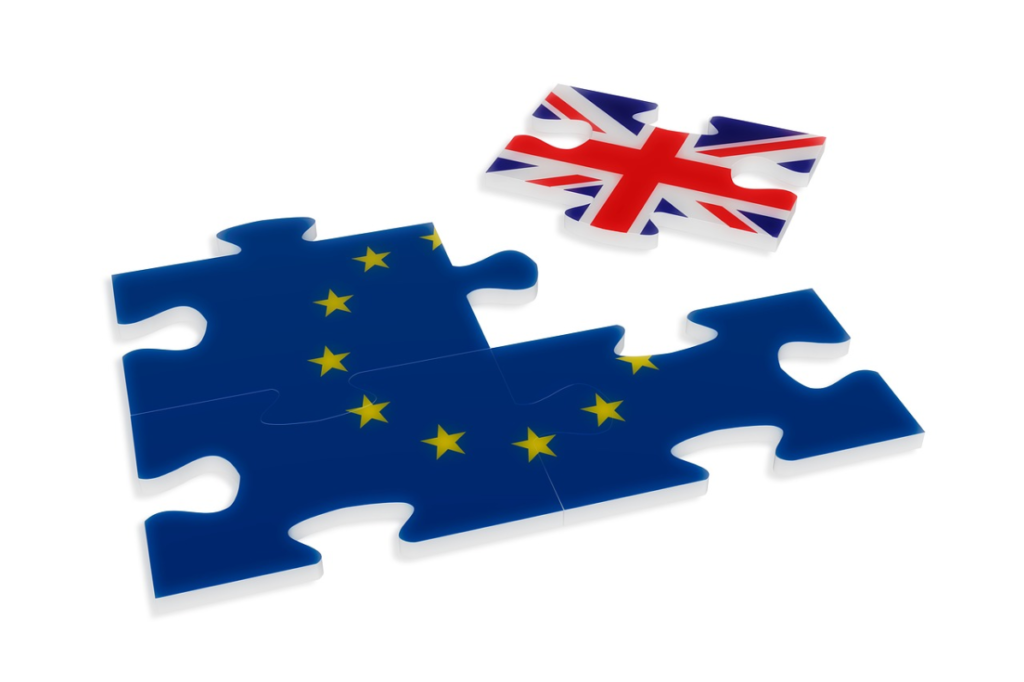
Dovetailing with a previous article on the EUIPO (and its choice of location) it is only right to comment on the “other side” of the Intellectual Property world; Patents, and the Unified Patent Court.
A brief history on this, The Unified Patent Court agreement was signed on 19 February 2013 in Brussels by 25 Member States (except Spain, Poland, and Croatia). It is due to be implemented by the end of 2021. Its main purpose is to create an international court to deal with the infringement and validity of both Unitary Patents and European Patents. Its rulings will apply in all Member States that have ratified the Agreement on a Unified Patent Court (UPC Agreement).
We will explore the ratification process in more detail later. We could talk about every member state’s ratification progress, however we will focus purely on the UK for this discussion. With that being said, it is important to note the three mandatory ratifiers were/are the UK, France and Germany. Whilst no longer in the EU, the UK did ratify the agreement at one point in time…
The UK ratified the Agreement on a Unified Patent Court in April 2018, despite the UK’s plans to leave the EU. This was viewed as surprising because the consensus was that non-EU members could not participate in the new UPC system. Even more surprising that the UK ratified the UPC after the national referendum on Brexit (which is a topic that needs more than one line to discuss). We would however welcome your comments on this point!!
Fast forward to July 2020, The UK officially confirms it is pulling out of the UPC, it could be argued that this never should have got this far given the Brexit implications, however we now know the stance the UK has taken.
After speaking with many IP specialists across Europe, there seems to be a split consensus about the future of the UPC. There are some who are unsure if the UPC can still happen, and there are those of the mindset that even with the UK pulling out of the agreement, the UPC can and will go ahead. Which is quite interesting because of the three mandatory ratifiers needed, as previously said, only France and Germany remain part of the EU. (There is also the issue of Germany and their ratification being overturn by the Federal Constitutional Court, however a new draft bill has been submitted which looks like it will finally ratify the UPC)
Arguably, there is no precedent that we can draw on to see how this will play out, but we do have existing International Treaty laws. The question is where do we go from here, as opposed to where does this leave the UPC?
If the UPC can’t go ahead due to the ratification process, then the obvious decision would be to leave things the way they were pre the UPC agreement- yes, this will be seen as counter intuitive, especially considering the amount of time and resources invested to the UPC: 7 years and counting. However, it would be the simplest thing to do, considering the current situation and the potentially conflicting interests of the remaining member states. If this were to happen, much of the existing framework could be ‘reused’ and potentially contentious areas re-negotiated to make the terms more acceptable, potentially drawing in the three original detractors (Spain, Poland and Croatia).
However, what is more likely, will be a new agreement which will be less rigid and allow for more flexibility on entry / decisions. If the UPC’s ultimate mantra is to create a global court, then surely this must be lived up to? The current agreement is a comprehensive one, and yes, it is for the purpose of European patents. The uncertainty around the current state of the UPC is a real topic of interest with material consequences depending on what happens next.
The last alternative, and this is an extreme idea, would be the formation of a new patent court. This is a subject that we will discuss in a future article, however in short – this could be an exciting proposal that would have an impact for generations to come, if, and it is a big if, a new unified patent court idea was to be explored. Failing this, it is difficult to see a future for the UPC in its current form.
It must be stressed that the above thoughts are purely hypothetical, we do not currently know how Britain leaving the UPC and the EU will impact on the UPC and whether it will prevent it going ahead.
How can this go ahead, will it go ahead, will it be renegotiated, will there be an alternative solution? Whatever happens next, is going to be interesting, the developments and ramifications on the Intellectual Property world are not insignificant.
Chris is a Senior Consultant at Fides Search and is Head of IP and Patents. To find out more get in touch with Chris:
Mobile: +44 (0) 7407 895 518 |Direct Dial:+44 (0) 20 3642 1873 | Email: Chris@fidessearch.com

Chris Excell, Head of IP & Patents writing on the EUIPO.
The surreal time we are in promotes both a chance to reflect and refocus on matters that are important to us. As such, I wanted to share a few thoughts on the EUIPO and how it has got to be so significant in the intellectual property world. Also, why Alicante?
The EUIPO, then known as the Office for Harmonization in the Internal Market (OHIM) was one of six agencies set up under the 1993 Treaty on the European Union (the Maastricht Treaty being founded in 1994).
It was somewhat surprising when it was announced, that the OHIM, would be headquartered in Alicante, Spain. Especially as the European patent office was based in an arguably more business centric location in Munich. The proximity of the German Patent Office at the time and the Deutsches Museum (German Museum) created a “technology triangle”.
One could argue that it would have made more sense for the OHIM to replicate this launch in either the same country, or a more fertile place for businesses?
It took only two years for the surprise to go away.
In April 1996, the first community trade marks were received, these were in vast quantities that surpassed even the most confident projections. In the first month alone, nearly 22,000 trade mark applications were sent to the office. Original predictions had been for 15,000 in the first full year. In effect, the Office had received more trade mark applications in its first few days of activity than had been anticipated for its first eighteen months.
Interestingly, by the end of 1996, 46,700 trade mark applications had been received. As well as confirming the success of the new EU trade mark system as a valuable tool for business both inside and outside the Union, this also meant that the income the Office earned from fees had surpassed its outgoings, and that the new agency was now fully financially self-sustaining.
As you can deduce, the demand for the new trademark offering was there, and the amount of applications exceeded every expectation. It wasn’t reliant on where the EUIPO was based. So whilst Alicante did seem a surprise choice at first, it turned out to be a master stroke. The EUIPO never intended to choose a location purely on a market/industry hotbed. It was actually concentrating on consolidating itself as an IP office with global reach, confirming the vision of its founding fathers as it became both a motor and a reflection of the EU’s Internal Market. This is why the location didn’t actually matter.
The model used has been replicated by many business today (not just across the legal sector) and has created one, focused international offering. Additionally the vision of being fully sustainable, alongside the technology available to complete the trademark filing process entirely online, has seen the EUIPO evolve into a place that is an eco-friendly (solar panels and wind turbines help provide electricity, rain water is recycled and energy consumption has been significantly lowered) exciting, selfless community. The EUIPO’s significance goes beyond the intellectual property world. It represents choice and freedoms.
Chris is a Senior Consultant at Fides Search and is Head of IP and Patents. To find out more get in touch with Chris:
Mobile: +44 (0) 7407 895 518 |Direct Dial:+44 (0) 20 3642 1873 | Chris@fidessearch.com

Global conglomerates, tech giants and now nations are implementing block chain technology for a variety of reasons.
Improved transparency leading to gains in trust is an overriding benefit of implementing the blockchain, which offers the potential to re-define some of the user’s key business relationships.
Removing the paper trail and gravitating towards a safer, faster, and more efficient infrastructure are the drivers for many stakeholders looking to use the blockchain platform. IBM is already working on more than 500 projects utilising blockchain technology according to their website.
Arguably the most famous blockchain crypto asset (Bitcoin) has seen a recent increase in acceptance in the mainstream due to a wider understanding of the crypto currency. One of the most endearing stories of Bitcoin so far is not the famous “Pizza Day”. Recently reported by Forbes magazine, a beachside town in El Salvador received an anonymous donation from a grateful visitor. This has led to the creation of a financial ecosystem that evolves almost entirely around the cryptocurrency.
Even with closed borders (due to Covid-19) the town of El Zonte has managed to find their own route forwards especially now that the currency is at an all-time high and is pushing the $11,000 price per coin mark. The transparency of the blockchain network benefits all the stakeholders in the supply chain in the same way, transparent, automated and exceptionally fast.
Global law firm Herbert Smith Freehills LLP have paired with the Australian Government and IBM to further their digital economy. Known as the Australian National Blockchain (ANB) the ANB will soon invite regulators, financial institutions and business to take part in the pilot set to launch by the end of the year according to their website.
Smart legal contracts are exciting and a great legal talking point. The benefit of automation also come with limitations and headache. What happens when they cannot be reversed? There is an inherent lack of flexibility with no undo button to press.
It’s clear that there is a race to harness the benefits of the blockchain technology, Dubai is aspiring to become the first government to run fully on smart contracts which is fascinating as the speed at which the emirate and country is becoming digitised is commendable.
As always this space will be an exciting one to watch. Many legal opportunities will present themselves, not least regulatory and a compliance related, it will be an interesting watch to say the least.
By Mathew Parker, Consultant at Fides Search. He dedicates his time to working with clients on their key strategic hires within TMT. To find out more get in touch with Mathew:
Mobile: +44 (0) 7391 405 563 | Direct Dial:+44 (0) 20 3642 1874 | mathew@fidessearch.com
 Ed Parker
Talks about ‘How to Build Trust in a Search Process’.
He shares his thoughts on our LinkedIn page. Please click the link to watch the segment in full How to Build Trust in a Search process
In this piece Ed Parker talks about:
Stay well from the team at Fides Search.
To celebrate World Mental Health Day this Thursday 10th October, we publish a conversation with Jonathan Moult and Jonathan Coppin of Moult Coppin. Both former City lawyers who have retrained in psychology and psychotherapy, they offer us their insights about how best to address the mental health crisis in law.
“We established Moult & Coppin to help on a bigger scale” explained Jonathan Coppin, former Head of Corporate at Hogan Hartson (now Lovells) and qualified psychotherapist. “In the UK, there has been a lot of outsourcing of mental health to employers, through seeking private counselling or the involvement of charities. We wanted to offer a more coherent, joined-up approach to what law firms are able to deliver currently”.
Indeed, the state of lawyer mental health in the UK is a cause for concern. Official figures published by the Health and Safety Executive rank the legal profession as the third most stressful professional job, due to the level of work-related stress, depression and anxiety reported. This year, the Junior Lawyers Division Wellbeing Survey found that 58% of respondents felt unable to cope at work, and 38% had experienced mental health problems in the past month. Calls to charity helpline LawCare reached a ‘record high’, with 65% of calls coming from women and 45% from trainees or those who had been qualified for five years or less.
The reasons for this are multi-faceted, ranging from the anxiety-inducing culture of legal practice and qualification, poor work-life balance and high client demands, the cultural stigma attached to poor mental health in law and a lack of line manager training in dealing with mental health matters when they do arise.
“The law firm mental health model is currently based on three strategies” clarifies Jonathan Moult, a Chartered Psychologist and former Head of Banking for Simmons & Simmons in Hong Kong. These include:
“The problem is that many lawyers are often too far along when they try and seek help” says Moult, with training not going far enough to address the causes of poor lawyer wellbeing. “Education and ambassadors are definitely helpful in making people think and addressing stigma, but it does not solve the problem of poor mental health” agrees Coppin. “For example, many internal teams don’t feel necessarily equipped and supported to deal with issues of mental health when they do arise”.
Instead, Moult & Coppin challenge the time that firms should intervene on lawyer mental health. “The problem becomes ‘medicalised’ when referred to an outside agency” says Coppin. “This makes you feel as though something is wrong with you, and even requires a need to prove you are sick to access treatment.” Rather, offering interventions earlier that are accessible to everyone, would normalise and de-stigmatise mental health in law firms. Taking this view, anxiety and stress are considered as an occupational hazard that should be expected when working under the challenging conditions present in law firms. “People suffering only ever think that this is happening to them, where it is not credible to say this” Moult adds. “We need to positively fame mental health experiences in law firms, such as obstacles lawyers should strive to overcome.”
Their solution is for firms to offer individual psychotherapy sessions to lawyers at different points in their careers. Such sessions would be strongly encouraged as the default setting and provide lawyers with an opportunity to discuss their experiences with an external psychotherapist. “This will help overcome stigma and address individuals thinking that they have a personal problem, rather than their feelings being a result of their working environment” says Coppin. “It will stop the self-selection of people into EAP’s and provide equal treatment to everybody” agrees Moult. “Ultimately, it is a more humane approach to addressing this issue”.
However, it is hard to provide law firms with evidence on return of investment needed to implement such a scheme. “It might help if law firms could do more to normalise the situation so people could be more realistic and practical about what they’re dealing with” says Jonathan Coppin. “Things have got a lot worse than how they used to be. People’s prospects have got worse – financial stability, job security, promotion potential – all of which lead to added anxiety”. Jonathan Moult agrees: “Institutions could do more to engage with these issues. They are not going to self-solve. Law firms could engage with this now in a more realistic way”.
‘“It seems that people want to do something but at the moment leadership on mental health in law firms is largely limited to being an ambassador. It doesn’t look as if firms have found a meaningful response to the mental health crisis yet” concludes Coppin.
Jonathan Moult and Jonathan Coppin are co-founders of Moult Coppin, offering psychological support through counselling and psychotherapy to City professionals. You can find out more about them here.
Is there something we can help you with?
If not right now, we can include you on next weeks' newsletter update?
CLICK HERE